
Bringing skilled instrumental tutors into your school transforms how pupils experience music.
It turns lessons into living, creative moments that build confidence, focus, and pride.
With Shropshire Music Service (SMS), your school gains access to a team of 44 highly experienced, DBS-cleared specialists, teaching across every major instrument family – strings, woodwind, brass, percussion, guitar, keyboard & piano, and voice.
Each tutor is not only a trained musician but also an educator with a deep understanding of how children learn. That blend of skill and empathy makes lessons engaging, structured, and inclusive for all abilities.
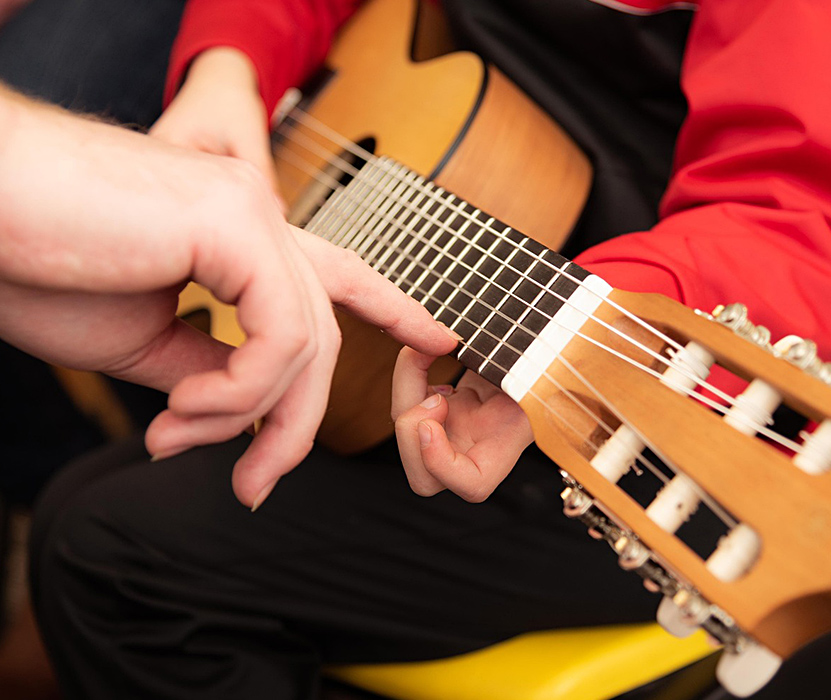
Lessons can be one-to-one, paired, or in small groups, depending on age, ability, and budget.
We work with schools to ensure every pupil has a chance to participate, regardless of background or financial situation.
All SMS tutors are qualified musicians and educators who bring enthusiasm, patience, and creativity to every session.
Pupils can work toward graded exams, school concerts, and join ensembles as their skills develop.
Instrumental lessons go beyond music. Pupils learn self-discipline, listening, and collaboration.
They build focus and perseverance – qualities that support wider learning and wellbeing.
Regular lessons also strengthen your school’s music culture, enriching assemblies, performances, and community events.
Music becomes not just a subject, but part of your school identity.
Instrumental tuition with Shropshire Music Service is also about legacy.
Many of today’s young musicians in Shropshire first picked up their instruments through our school programmes – some have gone on to study at conservatoires, perform professionally, or return as tutors themselves.
But just as many simply carry music with them through life: confident, creative, and better connected to others.
By partnering with SMS, your school becomes part of that story – nurturing talent, widening opportunity, and ensuring that the joy of live music continues to thrive in the next generation.
Thinking about bringing more music into your school?
Contact us to arrange a visit from our friendly team. We’ll come to your school, answer your questions, and show how we can help make music a vibrant part of your pupils’ learning.
Shropshire Music Service offers one of the widest selections of instrumental tuition in the region, covering every major instrument family and style.
Schools can choose from strings, woodwind, brass, percussion, guitar, keyboard, piano, and voice, ensuring there’s something for every pupil’s interest and ability.
Here are some common questions we are asked by schools.
Shropshire Music Service provides tuition on a wide range of instruments, covering all main families – strings, woodwind, brass, percussion, guitar, keyboard, and voice.
Typical choices include violin, viola, cello, flute, clarinet, trumpet, cornet, trombone, saxophone, piano, drums, and guitar (both classical and electric). For early-stage learners, we also offer accessible entry points such as recorder, ukulele, or smaller string instruments designed for younger players.
Our tutors bring a wealth of expertise, many being active performers themselves. Lessons are tailored to your school’s focus – whether classical, contemporary, or cross-genre. As pupils progress, they can take part in ensembles, graded exams, or local performances, giving them the full experience of being a musician.
We work flexibly around each school’s timetable to make sure instrumental tuition fits smoothly into the day. Lessons can take place during school hours, as lunchtime sessions, or as after-school clubs.
Our coordinators collaborate with your school’s music lead to organise a consistent timetable that minimises disruption to core learning while keeping lessons regular and engaging. We can even arrange a rotation system, so pupils don’t miss the same class each week.
For schools with multiple pupils learning the same instrument, group lessons can also be scheduled to maximise access and efficiency.
Definitely. Many pupils begin their musical journey through our school-based lessons. SMS tutors are skilled in teaching absolute beginners, helping them develop strong foundations in posture, technique, and listening.
Lessons are interactive and fun, using games, visual aids, and ensemble playing to maintain engagement. As pupils gain confidence, they’re introduced to simple notation, rhythm, and creative exercises.
Over time, they’ll be able to perform solos and play in groups, gaining a sense of progress that boosts motivation and pride. The first step – that very first note – is often where a lifelong love of music begins.
Schools can either use their own stock or access instruments through the SMS Instrument Hire Scheme. This allows pupils to borrow high-quality, well-maintained instruments at a low cost, avoiding the need for parents to buy equipment straight away.
SMS handles delivery, maintenance, and servicing, ensuring instruments remain in excellent condition. We also offer guidance on safe storage, labelling, and pupil care.
For pupils advancing quickly, upgrades or replacements can be arranged with ease, keeping the learning process smooth and uninterrupted.
The process is simple. Schools can get in touch via phone or email to express interest in instrumental tuition. Our team will discuss your needs, recommend suitable lesson types (individual, paired, or small group), and match your pupils with a tutor who fits your school’s ethos.
Once schedules and costs are confirmed, SMS manages all administrative setup, providing registers, payment details, and ongoing communication with your music lead. We also supply reports and progress updates each term.
Pupils can then move naturally into wider SMS opportunities such as ensembles, workshops, and performances, creating a complete and inspiring music pathway from first note to full stage performance.